
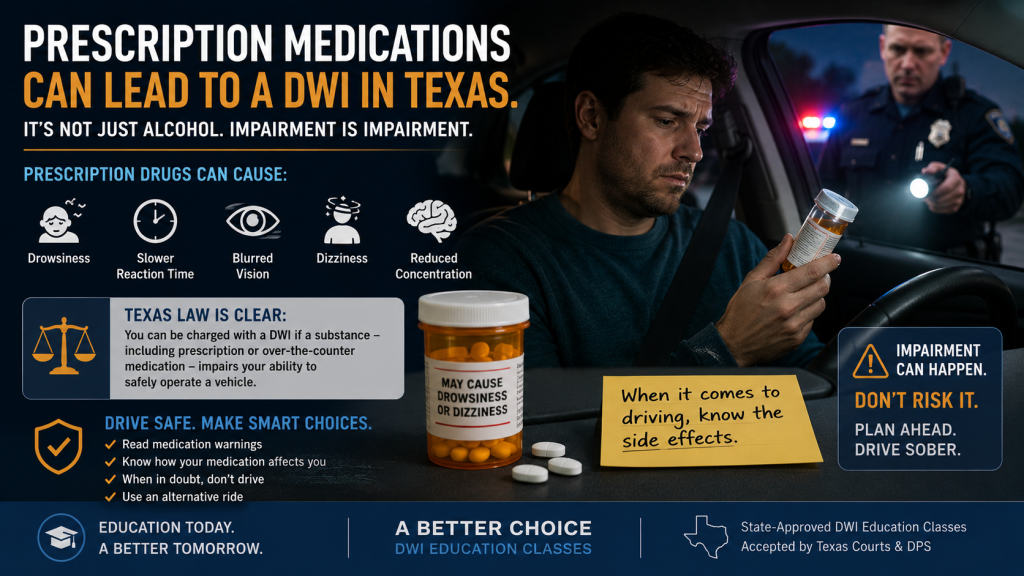
Can Prescription Medications Lead to a DWI in Texas?
TLDR
Yes. In Texas, you can be charged with a DWI if prescription medication impairs your ability to safely operate a vehicle. Even when a medication is legally prescribed, drivers may face serious legal consequences if the medication affects judgment, coordination, or reaction time.
Many Texans assume that DWI laws only apply to alcohol or illegal drugs.
However, Texas law focuses on impairment, not just what substance caused it.
That means a person can potentially face a DWI charge if a prescription medication affects their ability to drive safely.
Whether you’re commuting through Houston, navigating traffic in Dallas, traveling around Austin, or driving in a smaller Texas community, it’s important to understand how certain medications can affect driving performance.
How Can Prescription Drugs Affect Driving?
Many medications can cause side effects that impact driving ability.
Common side effects include:
- Drowsiness
- Slower reaction times
- Dizziness
- Blurred vision
- Reduced concentration
- Poor coordination
Even when taken exactly as prescribed, these side effects can make driving dangerous.
Common Types of Medications That May Cause Impairment
While every person reacts differently, medications that may affect driving include:
Pain Medications
Some prescription pain relievers can cause:
- Drowsiness
- Slowed reaction times
- Reduced alertness
Sleep Aids
Sleep medications may leave lingering effects even after waking up.
Anti-Anxiety Medications
Certain medications prescribed for anxiety may affect:
- Judgment
- Focus
- Coordination
Muscle Relaxers
These medications can cause:
- Fatigue
- Dizziness
- Delayed responses
What Does Texas Law Say?
Texas DWI law does not require alcohol to be involved.
A person may be charged if they:
Lack the normal use of mental or physical faculties due to a substance.
That substance can include:
- Alcohol
- Illegal drugs
- Prescription medications
- Over-the-counter medications
The key issue is whether the driver was impaired.
How Do Officers Determine Impairment?
Law enforcement may consider:
- Driving behavior
- Field sobriety tests
- Physical observations
- Statements made by the driver
- Toxicology testing when appropriate
Every case is different, but officers focus on whether a driver’s abilities appear impaired.
How Can You Protect Yourself?
Before driving, always:
✔ Read medication warning labels
✔ Follow your doctor’s instructions
✔ Avoid driving if you feel drowsy or impaired
✔ Ask your pharmacist about driving-related side effects
✔ Use alternative transportation if necessary
Making a safe decision can help protect both you and others on the road.
Why Education Matters
Many people are surprised to learn that prescription medications can lead to driving impairment.
Education helps individuals:
- Recognize warning signs
- Understand risks
- Make safer choices
- Avoid future violations
At A Better Choice, we believe knowledge plays an important role in preventing impaired driving incidents.
FAQs
Can you get a DWI from prescription medication in Texas?
Yes. If the medication impairs your ability to drive safely, a DWI charge is possible.
Is it illegal to drive after taking prescribed medication?
Not automatically. The issue is whether the medication affects your ability to safely operate a vehicle.
What medications can affect driving?
Pain medications, sleep aids, anti-anxiety medications, muscle relaxers, and other drugs may cause impairment.
Can over-the-counter medications affect driving too?
Yes. Some cold, allergy, and sleep medications can cause drowsiness and reduced alertness.
Call to Action
If you’ve been ordered to complete a DWI Education Course in Texas, it’s important to choose a trusted provider.
A Better Choice offers state-approved DWI Education Classes accepted by courts and Texas DPS across Houston, Dallas, Austin, San Antonio, and throughout Texas.
👉 Visit https://dwiclassestx.com to enroll today and stay on track with your court requirements.